

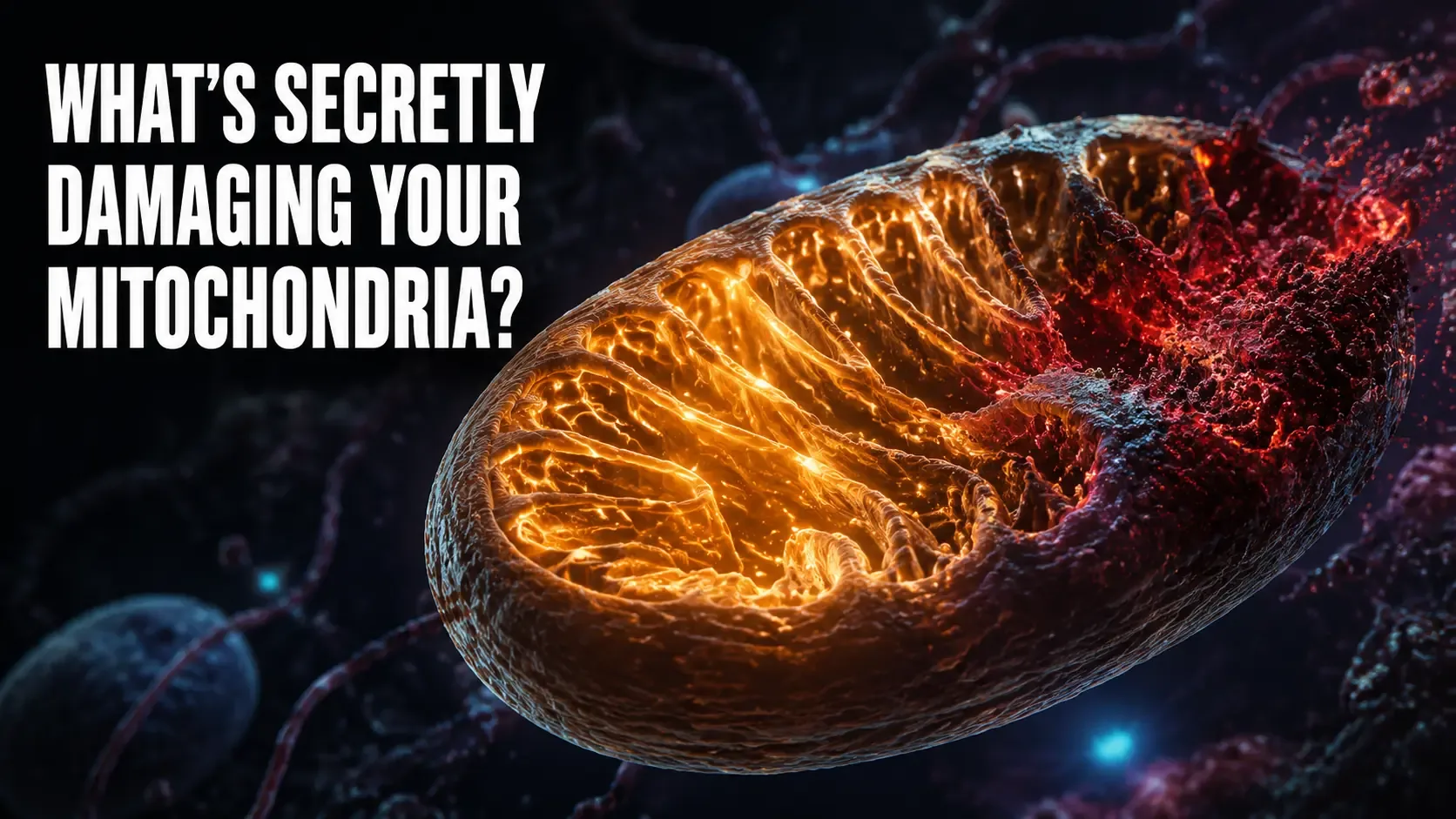
What’s Secretly Damaging Your Mitochondria?
Five forces that can quietly suppress cellular energy, slow recovery, and keep you operating in survival mode
By John Allen Mollenhauer “JAM”
Founder, Regenus Center and Creator of The Energy First Path.
If you’re struggling with persistent fatigue, afternoon crashes, brain fog, inflammation, or unusually slow workout recovery, don’t automatically write it off as aging.
Your mitochondria may be responding to the conditions you’re creating around them.
Most people have been taught that mitochondria are tiny power plants that blindly convert food and oxygen into ATP—the usable energy that powers nearly everything your cells do.
That’s true, but incomplete.
They require rest, lots of it, and ideally in the presence of light.
Mitochondria are also highly responsive signaling hubs. They continually adapt to nutrient availability, physical demand, inflammation, oxidative stress, sleep, circadian rhythms, and the overall condition of the cell.
In practical terms, they are continually responding to one fundamental question:
Are conditions favorable for producing energy—or is this a time to defend, conserve, and survive?
That is not a literal conscious decision. It is a useful way to describe a highly complex process known as metabolic adaptation.
When conditions are favorable, healthy mitochondria can efficiently generate ATP, communicate with the rest of the cell, help regulate inflammation, and adapt to increased demand.
When the cellular environment remains overloaded or threatened, mitochondrial behavior changes. Energy metabolism may become less efficient. Oxidative stress can rise. Damaged mitochondria may accumulate. Inflammatory signaling may remain elevated.
Eventually, you feel the consequences.
I understand this personally.
Years ago, I tried to solve exhaustion with the same habits that helped create it: more discipline, more stimulation, more output, and more pushing through fatigue. I was attempting to demand performance from a body that lacked the energetic capacity to sustain it.
That experience eventually shaped the philosophy behind Regenus Center, the first step on the energy-first path, which will help you stop putting energy last and start putting energy first.
Energy leads. The body and your quality of life follow.
Here are five forces that may be quietly interfering with your mitochondrial health—and what you can do about them.
1. Too Much Fuel, Too Often
Food provides the raw material mitochondria use to generate energy. But more fuel does not automatically produce more energy.
Imagine continually pouring cars onto a highway that is already gridlocked. Eventually, the system cannot efficiently process incoming traffic.
A similar problem can occur when the body receives a near-continuous supply of calories, particularly in the presence of overeating, low physical activity, poor metabolic flexibility, or insulin resistance.
As mitochondria process carbohydrates and fats, electrons move through the electron transport chain (influenced by your exposure to rest and light). A small amount of reactive oxygen species, or ROS, is normal and participates in healthy cellular signaling. But metabolic overload and mitochondrial dysfunction can increase electron leakage and excessive ROS generation.
At that point, oxidative signaling can become oxidative stress, damaging proteins, membranes, mitochondrial DNA, and other cellular structures. Researchers have linked mitochondrial fuel overload and redox disruption to the development and progression of insulin resistance, although mitochondrial dysfunction is not the sole cause of metabolic disease. Research published in the International Journal of Obesity and Nature Reviews Endocrinology describes this relationship.
What to do
Stop feeding your body from the moment you wake up until the moment you go to sleep, and make sure what you eat is predominantly nutrient-rich.
For many people, a consistent eating window can create a healthier daily rhythm and reduce constant exposure to nutrients, let alone the non-nutrients in nutrient-poor and nutrient-barren foods, like cholesterol and saturated fat, refined and added salt, oil, and sugar, and chemicals.
Human trials suggest that time-restricted eating may modestly improve several cardiometabolic measures, although results depend on the individual, food quality, total intake, timing, and underlying health. A recent systematic review included 41 randomized trials, while a separate clinical trial found that an 8- to 10-hour eating window produced modest benefits in adults with metabolic syndrome. Systematic review | Randomized clinical trial
The goal is not extreme fasting. It is to stop creating a constant metabolic traffic jam.
Build meals around:
- Nutrient-rich whole foods
- Adequate protein for your needs from nutrient-rich whole foods.
- Fiber-rich vegetables, fruits, beans, nuts, and seeds
- Minimally processed sources of fat
- An eating schedule that leaves genuine space between meals
If you use insulin or glucose-lowering medication, have a history of disordered eating, are pregnant, or have another relevant medical condition, discuss fasting or restricted eating windows with your clinician first.
2. Damage to the Mitochondrial Membrane
Mitochondria cannot produce energy efficiently unless their structure remains intact.
Inside every mitochondrion is an intricately folded inner membrane. Those folds, called cristae, dramatically increase the surface area available for oxidative phosphorylation and ATP production.
A unique phospholipid called cardiolipin helps organize this membrane and stabilize components of the respiratory system. Changes in cardiolipin composition, oxidation, or remodeling are associated with impaired mitochondrial architecture and function. Research review on cardiolipin and mitochondrial structure | Clinical-analysis review
This matters because mitochondrial health is not just about “fuel.”
It is also about infrastructure.
Chronic oxidative stress, metabolic disease, certain toxins, aging, and some genetic disorders can compromise the membranes and the molecular machinery that produce energy.
What to do
Support the structure rather than chasing another stimulant.
That means:
- Eat predominantly whole, nutrient-rich foods.
- Obtain sufficient essential fatty acids without assuming that one particular dietary fat will “rebuild” mitochondria.
- Avoid smoking and minimize unnecessary exposure to pollutants.
- Address insulin resistance and chronic inflammation.
- Exercise consistently.
- Correct clinically verified nutrient deficiencies with professional guidance.
The peptide elamipretide, also known as SS-31, has been investigated for its ability to interact with cardiolipin and protect mitochondrial cristae in experimental disease models. But it should not be presented as a general wellness supplement or a proven way to repair anyone’s mitochondria. Much of its mechanistic evidence comes from cellular and animal research, and its clinical usefulness depends on the specific condition being studied. Preclinical SS-31 research
If you are exploring peptides, do so with an appropriately licensed medical professional—not through social media promises.
3. Chronic Inflammation and Unresolved Illness
Inflammation is not inherently bad.
It is a protective response that helps the body fight pathogens, repair tissue, and respond to injury. The problem is inflammation that never resolves.
During an immune response, certain activated immune cells increase their reliance on glycolysis—a fast way to produce energy and metabolic building blocks—to support immediate defense. That does not mean every cell in your body abandons its mitochondria. It means that immune metabolism is deliberately reprogrammed according to the task at hand.
Pro-inflammatory immune cells often rely more on glycolysis, while regulatory and repair-oriented immune cells may rely more on mitochondrial oxidative metabolism and fatty acid oxidation. Review of glycolysis in inflammation | Review of immunometabolism
The simplified takeaway is powerful:
Your mitochondria are not just power plants. Under stress, they also participate in cellular defense.
When inflammatory signaling remains elevated due to metabolic dysfunction, autoimmune disease, persistent infection, poor sleep, chronic psychological stress, periodontal disease, gut disorders, or another unresolved condition, mitochondrial function and inflammation can begin to reinforce one another.
That can become a vicious cycle:
Inflammation disrupts mitochondrial function. Dysfunctional mitochondria generate danger signals. Those signals can amplify inflammation.
What to do
Do not merely suppress the symptom. Investigate why the alarm remains on.
Persistent fatigue deserves an appropriate medical evaluation. Depending on the person, that may include assessment for anemia, thyroid dysfunction, sleep apnea, medication effects, metabolic disease, nutrient deficiencies, infection, cardiovascular problems, autoimmune conditions, depression, or other causes.
Fatigue is real, but it is not a specific diagnosis.
“Your mitochondria are damaged” should never become a catch-all explanation that prevents proper medical care.
4. Poor Recovery and Breakdown of Mitochondrial Quality Control
Your body must continually maintain its mitochondrial network.
Damaged portions can be separated through fission. Healthy mitochondria can fuse and share components. Severely dysfunctional mitochondria can be tagged and recycled through mitophagy, a specialized form of cellular quality control.
Sleep supports metabolic regulation, tissue repair, hormonal balance, immune function, brain health, and physical recovery. Research shows that disrupted sleep and circadian rhythms can adversely affect muscle metabolism and recovery. Even one night of total sleep deprivation has been shown to reduce muscle protein synthesis and create a more catabolic hormonal environment in healthy adults. Human sleep-deprivation study | Sleep and skeletal-muscle review
Calling sleep the “night shift for mitophagy” is a useful metaphor, but it is too simplistic to claim that sleep directly switches mitophagy on and off throughout the entire human body. The relationship between sleep, circadian biology, autophagy, and mitochondrial quality control is real—but complex and still being studied.
What to do
Treat recovery as essential biological work.
Start with:
- A consistent sleep and wake schedule
- Morning outdoor light
- Reduced bright light late at night
- A bedroom that is cool, dark, and quiet
- Adequate recovery between demanding workouts
- Active management of psychological and occupational stress
- Evaluation for sleep apnea if you snore, wake unrefreshed, or experience daytime sleepiness
Urolithin A is also being studied as a nutritional compound that may influence mitophagy and mitochondrial gene expression. Early human trials have reported changes in mitochondrial biomarkers and modest improvements in certain measures of muscle endurance or strength. However, it has not been proven to “clear cellular dead weight” throughout the body or to reverse fatigue on its own. First-in-human trial | Randomized middle-aged-adult trial | Older-adult clinical trial
The evidence is promising. It is not permission to skip sleep, exercise, nutrition, or medical evaluation.
The same caution applies to NAD+ products. NAD+ is indispensable to cellular metabolism, but a rise in blood NAD-related metabolites does not automatically prove greater energy, restored mitochondria, or better clinical outcomes. Product-specific claims should be evaluated separately rather than treating every NAD+ supplement, injection, or oral strip as biologically interchangeable.
5. Not Giving Your Body a Reason to Produce More Energy
Mitochondria adapt to demand.
If your muscles are rarely challenged, the body has little reason to maintain extensive, energy-intensive infrastructure. Prolonged inactivity is therefore not simply a failure to “burn calories.” It is a low-demand biological signal.
Exercise sends the opposite message.
Muscle contraction activates signaling pathways involving AMPK, calcium, p38 MAPK, and PGC-1α, an important regulator of the genes involved in mitochondrial adaptation and biogenesis. One workout does not instantly fill your muscles with new mitochondria, but it can activate the molecular signals that begin the adaptation process. Repeated training increases that signal’s capacity. Human exercise study | Review of PGC-1α and mitochondrial function
This is why you cannot supplement your way around physical inactivity.
What to do
Create regular, recoverable demand through:
- Resistance training
- Brisk walking and aerobic conditioning
- Short intervals when appropriate
- Regular movement throughout the day
- Gradual progression rather than sporadic punishment
Cold exposure can activate adaptive stress pathways, but it is optional—not required—for mitochondrial health. It also carries risks for people with cardiovascular disease, uncontrolled blood pressure, cold-sensitive conditions, or a history of fainting.
Exercise remains the more established foundation.
Where Advanced Photobiomodulation Fits
At Regenus Center, we use advanced red and near-infrared photobiomodulation as part of a broader energy-restoration and recovery strategy.
Photobiomodulation is thought to influence mitochondrial and cellular signaling through several mechanisms. Cytochrome c oxidase has been proposed as an important photoacceptor, although ion channels, water dynamics, nitric oxide signaling, calcium, and redox pathways may also contribute.
The response is dose-dependent. More light is not always better, and wavelength, irradiance, treatment time, tissue depth, treatment area, and the condition of the person all matter. Mechanistic review | Clinical mechanism overview
PBM is not a magical battery charger, but as a the ower of a PBMt based regeneration center, it’s as close to it as you will find.
It is better understood as a biological signal—one that may help modulate cellular energy metabolism, circulation, inflammatory signaling, and tissue recovery when properly applied.
And it works best as part of a larger strategy.
You cannot continually overload your metabolism, sleep five hours, remain sedentary, push through every sign of fatigue, and then expect a light session—or any other biohack—to erase the consequences.
Technology can accelerate recovery.
It cannot make an unsustainable lifestyle sustainable.
Stop Blaming Your Age
Some changes in mitochondrial function do occur with age. But aging is not the only reason people lose energy, recover slowly, or feel as though their bodies are operating at lower capacity and no longer responding.
Often, the body adapts exactly as it was designed to.
It is responding to:
- Too much fuel and too little metabolic space
- Compromised cellular infrastructure
- Chronic inflammatory signaling
- Inadequate sleep and recovery, and inadequate recovery carried forward and compounding into skeep, and personal energy debt.
- Too little physical demand—or too much demand without recovery
The answer is not to force more performance from an exhausted system.
The answer is to change the conditions under which that system is operating.
That is the Energy-First Path.
Restore your energy. Expand your capacity. Build a lifestyle that performs.